

Winter Preparation for Plants in Central Texas

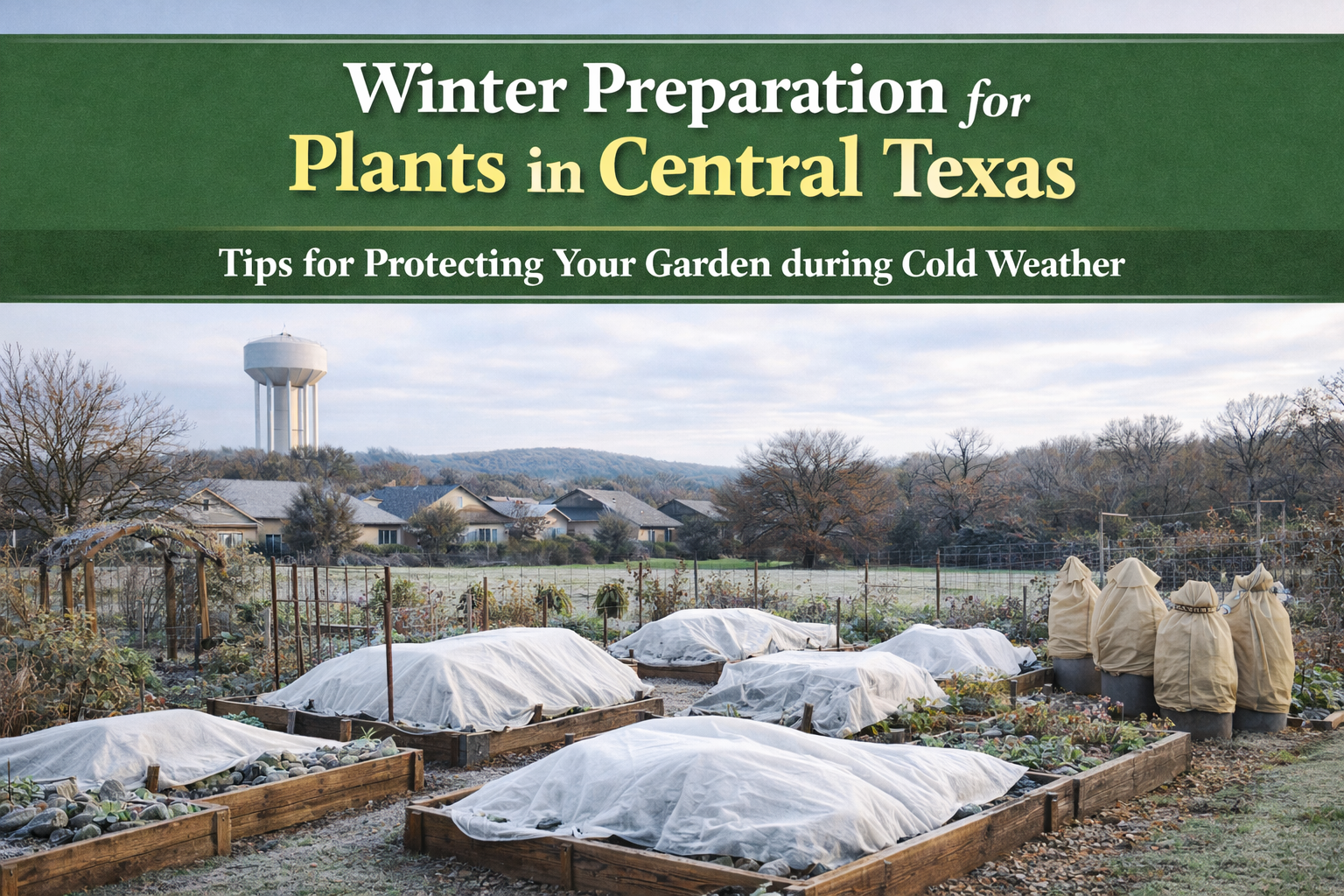
How to Protect Your Garden When the Temperatures Drop
Winter in Central Texas can be a little unpredictable — one day you’re in a T-shirt, the next you’re covering your plants before a surprise freeze. While we don’t get the long, hard winters of the north, our sudden cold snaps can still do some serious damage if your garden isn’t ready.
Here’s how to get your plants prepped for a Central Texas winter so they’ll bounce back strong come spring.
1. Know Your Freeze Risks
Our area can dip below freezing multiple times between December and February. Even a light frost can hurt tender plants, especially those in pots. Keep an eye on forecasts — once nighttime temps hit the mid-30s, it’s time to take action.
Quick tip: Keep frost cloths or old sheets handy. Don’t wait until the last minute — they always sell out when a freeze warning hits!
2. Mulch, Mulch, Mulch
A thick layer of mulch is your garden’s best blanket. It keeps roots insulated, locks in moisture, and helps regulate soil temperature.
Use shredded bark, leaves, or straw — about 2–3 inches deep — around perennials, shrubs, and young trees. Just keep the mulch a few inches away from the base of each plant to prevent rot.
Local bonus: You can often find organic mulch and compost locally at Community Gardens Bastrop, perfect for prepping your beds before the first freeze.
3. Water Before the Cold Hits
It might sound backward, but watering before a freeze actually helps protect roots. Moist soil holds heat better than dry soil, keeping your plants warmer overnight.
Give everything a deep soak the day before a hard freeze is expected — especially container plants and young trees.
4. Protect Container Plants
Potted plants are more exposed to temperature swings since their roots aren’t insulated by the ground. Move them:
- Close to the house or under a covered porch
- Into a garage or greenhouse overnight
- Or group them together and wrap the pots in burlap or old towels to keep roots warm
5. Cut Back (But Not Too Soon)
Avoid heavy pruning before winter — it can encourage new growth that will just get zapped by frost. Wait until late February or early March to prune most perennials and shrubs.
What you can do now: Trim off dead or damaged parts and tidy up, but leave most of the structure for frost protection.
6. Cover Wisely
When you do need to cover plants, use frost cloth or lightweight blankets — never plastic, as it traps moisture and freezes leaves. Drape coverings loosely so they reach the ground, trapping warmth from the soil.
Remove them during the day to let plants breathe and soak up sunlight.
7. Feed the Soil, Not the Leaves
Skip the fertilizer this time of year — you don’t want to push new growth before winter. Instead, focus on improving soil health with compost or organic amendments. Healthy roots mean a faster recovery when spring rolls around.
8. Take Notes for Next Year
Every garden is a little different. Notice which plants struggled and which thrived through winter. Jot down what worked — maybe that one spot by the fence stayed a bit warmer, or the pots under your oak tree did just fine.
These notes will make next year’s prep a breeze.


